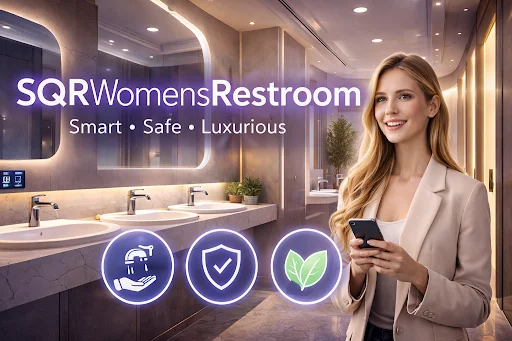
SQRWomenSRestroom is a design framework and operational model for women’s public washrooms that integrates privacy-first architecture, advanced hygiene tech, and inclusive accessibility. Built on proven sanitation standards and smart-infrastructure practices, this concept elevates comfort, privacy, and public health while making restrooms assets for cities and businesses.
Public-health organizations and development agencies have repeatedly emphasized the foundational role of safe sanitation for community health. The SQRWomenSRestroom approach marries those standards with cutting-edge automation and human-centered design to produce spaces that feel secure, clean, and modern.
RELATED: Spaietacle: Future of Immersive Experiences
Understanding the Concept
SQRWomenSRestroom blends three pillars: public-health compliance, smart automation, and emotionally intelligent design. Public-health compliance ensures restrooms meet sanitation benchmarks; smart automation delivers efficiency and preventive maintenance; and emotional design creates comfort and trust.
This concept is driven by evidence: improved sanitation reduces disease transmission and improves well-being, while automated monitoring lowers maintenance costs and improves reliability. The integrated approach turns restrooms into measurable, upgradable assets that serve users and facility managers alike.
Why Sqrwomensrestroom Is Important in Modern Infrastructure
Public restrooms are infrastructure — they affect health, equity, and city livability. Investing in modern women’s restroom facilities protects vulnerable populations, supports tourism and commerce, and signals a city’s or brand’s commitment to dignity and safety.
International development goals stress water and sanitation as essential services. When restrooms meet these commitments and integrate monitoring tech, they contribute directly to public-health targets, asset longevity, and measurable reductions in operational waste.
The Evolution of Women’s Public Restroom Design
History of Public Women’s Restroom Facilities
Historically, women’s public restrooms were reactive — added as demand rose with urbanization and women’s participation in public life. Early facilities often sacrificed privacy and cleanliness for capacity, reflecting limited materials and hygiene knowledge.
As sanitation science matured, so did restroom standards. The rise of plumbing systems, privacy partitions, and basic hygiene expectations created a baseline — but many legacy facilities still fall short of modern health and accessibility norms.
Transition from Traditional Restrooms to Sqrwomensrestroom Concepts
The shift to the SQRWomenSRestroom model reflects two major changes: tech-enabled operations and human-first design. Touchless fixtures, occupancy sensors, and automated cleaning schedules replace reactive maintenance, while single-occupancy stalls and better sightline control boost privacy and safety.
Facilities are also moving from singular function to integrated service hubs — offering baby-changing facilities, menstrual product dispensers, and accessible stalls designed with dignity and practicality in mind.
Role of Urban Development in Restroom Innovation
Urban planners now treat restrooms as strategic infrastructure: placed for equitable access, tied to transit nodes, and designed to support night-time economies and tourism. Forward-thinking cities prototype “smart toilet suites” that act as data nodes, feeding occupancy, water use, and maintenance signals back to building-management systems. Singapore has been a notable early adopter of managed public restrooms and guidance for maintenance and design.
Core Features of Sqrwomensrestroom
Privacy Enhancement Features in Sqrwomensrestroom
Privacy is non-negotiable. SQRWomenSRestroom prioritizes full-height or near-full-height partitions, staggered entry vestibules, and single-occupancy options. These elements reduce sightlines, limit sound transfer, and increase user comfort, creating a quieter, more secure atmosphere.
Thoughtful signage and discreet emergency communication systems also let users summon help without drawing attention, blending emotional safety with practical access.
Hygiene and Sanitation Technologies Used
Hygiene is delivered through touchless fixtures, antimicrobial surfaces, and ventilation systems that manage humidity and aerosol dispersion. Automated soap dispensers, hands-free taps, and sensor-triggered flush valves reduce cross-contamination and support robust hygiene standards endorsed by global health authorities.
Safety Features for Women in Public Spaces
Safety measures include smart occupancy monitoring, well-lit approaches, panic alarms, and staff-alerting systems. Strategically placed sightlines, CCTV in external circulation (not inside stalls), and robust maintenance logs create traceable safety frameworks.
Integration with building-security platforms allows for rapid incident response while preserving privacy where needed.
Accessibility and Inclusive Design Elements
Accessible design follows modern codes for wheelchair access, tactile signage, adult-changing stations, and lower basins. The aim is gender-inclusive flexibility: family rooms, unisex accessible stalls, and clear routes for mobility devices — all following up-to-date accessibility requirements.
Technology Behind Sqrwomensrestroom
Smart Sensors and Automation Systems
Sensors measure occupancy, humidity, odor, and water use, driving dynamic ventilation and cleaning triggers. These systems cut waste and ensure that supplies and housekeeping are deployed where needed — not on fixed cycles. This saves budget and improves cleanliness metrics.
Major smart-infrastructure vendors provide platforms that integrate these sensor fleets into centralized operations dashboards, allowing facilities to scale management across dozens or hundreds of restrooms.
IoT Integration in Modern Restroom Design
IoT connectivity turns restrooms into data-driven assets: alerts for leaks, people-counting for peak demand, and predictive maintenance that flags failing flush valves or clogged drains before they cause service outages. This connectivity lowers downtime and supports SLA-driven services in commercial spaces. Providers like Siemens and Honeywell International Inc offer building platforms that make this integration enterprise-grade.
(Note: entities above are included once each to highlight industry partners.)
Touchless Technology and Its Benefits
Touchless interfaces reduce infection risk and are preferred by users. From motion-activated faucets to voice-enabled controls and contactless payment for amenities, these technologies increase perceived safety and streamline maintenance workflows.
Smart Cleaning and Maintenance Systems
Automated cleaning schedules triggered by sensor thresholds (odor, occupancy) and CMMS integrations ensure that custodial teams are deployed efficiently. Smart chemical dispensers and robotic floor-cleaners can reduce human exposure to harsh chemicals while ensuring consistent results.
Sustainability and Environmental Impact
Water Conservation Systems in Sqrwomensrestroom
Low-flow fixtures, dual-flush toilets, and greywater reuse systems reduce freshwater demand. Sensor-optimized flush cycles and leak detection cut hidden losses, supporting city-level water conservation goals and lowering operating costs. Global sanitation guidance emphasizes water-efficient designs for resilient infrastructure.
Eco-Friendly Construction Materials
Durable, recycled, and low-VOC materials extend lifespans and reduce pollution. Choosing materials that resist biofilm formation reduces the need for aggressive chemical cleaners, aligning operational efficiency with environmental goals.
Energy Efficiency in Smart Restroom Facilities
Smart lighting (occupancy/ daylight sensors), heat-recovery ventilation, and demand-controlled ventilation lower energy use while ensuring healthy air quality. These systems can be integrated into building-energy management platforms to balance comfort and sustainability.
User Experience and Comfort
Lighting and Ventilation Optimization
Warm, even lighting and high-quality ventilation transform the user experience. Proper luminance reduces perceived dirt, while well-designed ventilation minimizes odors and improves overall air freshness.
Space Layout and Psychological Comfort
Designs that include clear sightlines to attendants, private entrances, and well-organized circulation reduce stress. Seating, mirrors, and thoughtful fixtures make spaces feel cared-for — raising trust and encouraging proper use.
Noise Reduction and Privacy Engineering
Acoustic panels, strategic materials, and mechanical-room placement reduce noise. Sound masking and stall-level insulation protect conversations and preserve dignity, creating a calm, private atmosphere.
Global Trends in Sqrwomensrestroom Design
Adoption in Developed Countries
Developed cities are rapidly deploying sensor-driven restroom solutions and single-occupancy models to meet higher expectations for safety and hygiene. These implementations are commonly found in airports, malls, and corporate campuses where service-level promises matter.
Emerging Trends in Asia and Urban Cities
Cities like Singapore have published guidance on public-toilet design and are piloting smart-toilet suites that combine IoT monitoring with rigorous maintenance protocols — showing how policy and tech can collaborate to raise standards.
Role of Smart Cities in Restroom Innovation
Smart-city strategies treat restrooms as nodes in urban services networks — tying sanitation to mobility, tourism, and public health dashboards. When data is anonymized and aggregated, planners can optimize placement, hours, and resource allocation to meet real demand.
Architecture and Planning Considerations
Importance of Urban Planning in Restroom Placement
Strategic placement ensures equitable access and supports safe night-time economies. Planners must balance visibility for safety with discreet entrances for privacy.
Building Codes and Safety Standards
Compliance with accessibility and fire-safety codes is mandatory. The modern code landscape (e.g., the International Building Code) increasingly includes provisions for accessibility, adult-changing facilities, and fixture installation standards — critical for any public-restroom upgrade. International Building Code
Future Architectural Concepts for Public Restrooms
Designers are exploring modular, prefabricated restroom suites that reduce construction time and improve quality control. Biophilic elements, adaptable stalls, and integrated digital wayfinding are on the rise.
Challenges of Implementing Sqrwomensrestroom
Cost and Budget Constraints
Initial capital costs for sensors and premium finishes can be high. However, lifecycle analyses frequently show payback through reduced maintenance, lower water and energy bills, and increased user satisfaction.
Maintenance Challenges
Technology requires maintenance expertise. Facilities must plan for firmware updates, sensor calibration, and spare-part inventories to avoid downtime.
Cultural and Social Considerations
Design must respect local norms about privacy and gender, and city planners should engage communities during design to ensure acceptance and correct placement.
Business and Commercial Value
Benefits for Shopping Malls, Airports, and Offices
Modern restrooms increase dwell time, customer satisfaction, and brand perception. For high-traffic venues, better restrooms reduce complaints and drive repeat visits — a tangible business advantage.
Customer Satisfaction and Brand Image Impact
A clean, safe restroom signals trustworthiness. Brands that invest in superior restroom experiences send a compelling message about care, quality, and attention to detail.
Future of Sqrwomensrestroom
AI Integration in Restroom Facilities
AI will analyze usage patterns to predict peak demand, schedule cleaning, and optimize supply stocking. Predictive insights can reduce costs and increase uptime.
Smart City Infrastructure and Public Health Impact
When restroom data is aggregated (privacy-first), cities gain insights into sanitation needs, outbreak monitoring, and resource allocation — boosting resilience and public health outcomes. Partnerships between health agencies and infrastructure providers create evidence-based improvements.
Future Predictions for Public Hygiene Technology
Expect more modular solutions, contactless payment and amenities, and integrated health-promotion features (e.g., menstrual-care access points). The future is smart, sustainable, and centered on human dignity.
RELATED: Lesbufy: New Identity Trend Online
Frequently Asked Questions
What makes SQRWomenSRestroom different from a regular public restroom?
It combines privacy-first design, touchless hygiene tech, IoT monitoring, and sustainability measures to deliver better safety, cleanliness, and accessibility.
Are these systems expensive to install and maintain?
Upfront costs can be higher, but IoT-driven efficiencies reduce long-term maintenance and utility expenses; many operators see lifecycle savings and higher customer satisfaction.
Do smart restrooms respect privacy?
Yes — sensors typically monitor environmental parameters and anonymous counts; cameras are used only in external circulation zones and never inside stalls.
Which standards guide these designs?
Public-health guidance from authorities like World Health Organization and accessibility rules such as the International Building Code inform best practices.
Can older facilities be upgraded to this model?
Absolutely — modular sensor packages, touchless retrofits, and selective stall reconfiguration can modernize legacy restrooms cost-effectively.
Summary
SQRWomenSRestroom is an optimistic blueprint: it pairs evidence-backed sanitation standards, smart building platforms, and empathetic design to create restrooms that are safer, cleaner, and more dignified. By aligning policy, technology, and user-centered architecture, cities and businesses can transform restrooms from an afterthought into a celebrated public service.
When we design with care and deploy with data, public restrooms become proof that infrastructure can protect health, preserve dignity, and uplift everyday life.