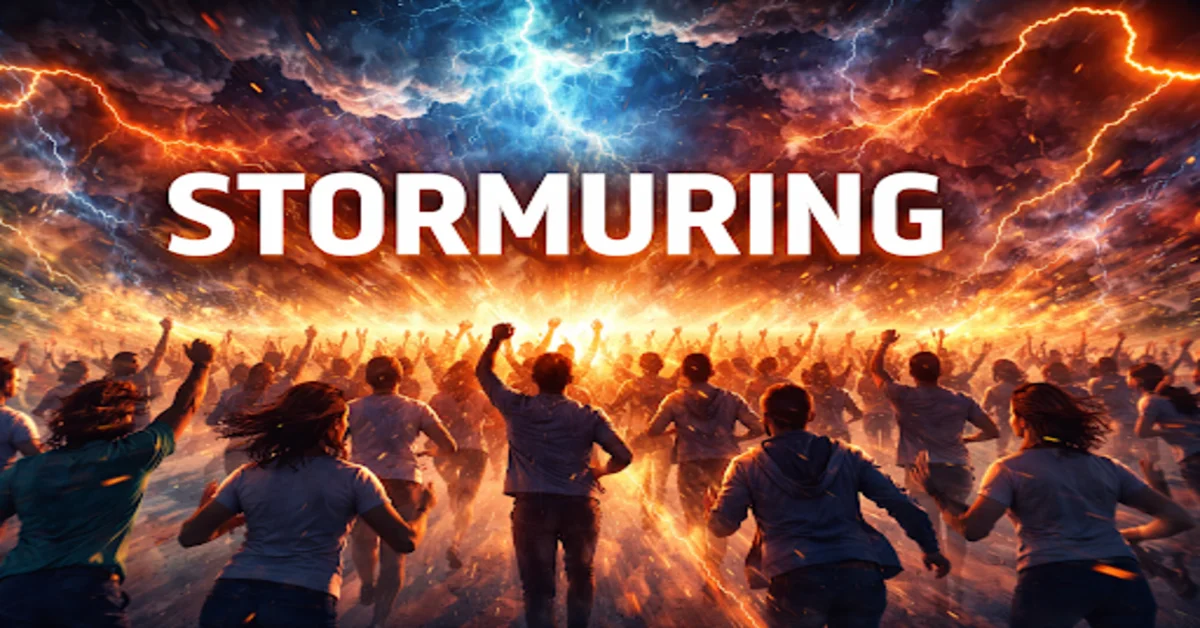
Stormuring describes rapid, emotionally charged collective action, driven by urgency, excitement, fear, or hope. It reflects moments when groups act together with momentum that can feel unstoppable. One term that captures this unique phenomenon is Stormuring. While it may not yet appear in traditional dictionaries, its usage in social science, psychology, and innovation discussions is gaining momentum. Stormuring meaning revolves around the rapid, emotionally charged movement of people or ideas, reflecting urgency, excitement, or determination that drives collective action.
At its core, Stormuring describes moments when groups of individuals act in sync, often without much hesitation, propelled by strong emotions. This can manifest in a physical context, like people rushing to a location, or in conceptual spaces, such as teams embracing new ideas with urgency. Understanding Stormuring helps illuminate patterns in group behavior dynamics, offering insights into why crowds escalate quickly or why ideas gain traction almost instantaneously.
Why understanding Stormuring matters is simple: recognizing these behaviors allows individuals and organizations to respond thoughtfully rather than react impulsively. By integrating knowledge of Stormuring in psychology and its emotional triggers, communities can channel collective energy into positive, structured outcomes rather than chaos. Awareness of these patterns is not only practical but transformative, turning raw momentum into actionable intelligence.
RELATED: Rosboxar: Fast Solutions for Business Growth
The Core Concept of Stormuring
Definition and Key Characteristics
The Stormuring definition highlights three core aspects: urgency, collective momentum, and emotional intensity. Unlike calm gatherings or traditional brainstorming, Stormuring is characterized by rapid, high-energy movements that can feel overwhelming yet compelling. Participants often act instinctively, influenced by the group’s momentum, resulting in synchronized actions that seem unstoppable.
Key characteristics of Stormuring include:
- Urgency-driven behavior: Actions are immediate, often bypassing rational deliberation.
- Emotional intensity: Emotions like excitement, fear, or determination fuel the collective motion.
- Forceful collective movement: Individuals are drawn together, creating group momentum effects that amplify over time.
Emotional Intensity and Collective Momentum
Emotional charge is what sets Stormuring apart from ordinary group activity. Strong feelings spread quickly, acting as emotional triggers that catalyze action. Once a threshold is reached, the behavior of one participant influences another, creating a ripple effect across the entire group. This phenomenon is reflected in social influence dynamics and collective behavior patterns, illustrating the power of human connection in high-intensity moments.
Stormuring examples abound in both physical and digital contexts. From crowds responding to emergencies to social media movements erupting around a trending cause, the combination of urgency and emotional intensity propels individuals to act collectively. Recognizing these dynamics provides insight into both the opportunities and risks presented by such rapid collective action.
The Psychology Behind Stormuring
Human Behavior Patterns in Groups
Psychologists studying group momentum psychology have long noted that humans are highly responsive to social cues. In Stormuring, individual hesitation often fades as collective energy movement takes over. People instinctively mirror others’ actions, creating synchronized behavior that may appear spontaneous but follows recognizable psychological patterns.
The phenomenon is not purely instinctive; it is also a reflection of emotional trigger responses. Cognitive stress patterns and perceived urgency can override rational thinking, causing participants to follow the flow of the group. By understanding these patterns, psychologists and sociologists can predict behavior and develop strategies for safe, effective crowd management.
How Social Influence Drives Stormuring
Social influence is at the heart of Stormuring. Individuals often rely on the group’s behavior as a guide for appropriate responses, a dynamic well-documented in behavioral research. Momentum psychology demonstrates that even a few initial actors can spark widespread movement, amplifying emotional and physical responses across the group.
This principle is particularly relevant in Stormuring in innovation. Teams can harness this phenomenon to accelerate creativity, adopting ideas with confidence as enthusiasm spreads. Recognizing the power of social influence allows leaders to guide collective energy, ensuring that momentum leads to productive outcomes rather than chaos.
Emotional Triggers of Stormuring
Fear, Excitement, Anger, and Hope
Stormuring is most often driven by intense emotions. Fear can trigger immediate emergency response behavior, prompting collective action to avoid harm. Excitement and hope encourage shared movement toward positive goals, while anger can fuel activism and protests. Each emotion interacts with cognitive stress patterns, creating a feedback loop that intensifies collective action.
The emotional component of Stormuring explains why certain events escalate rapidly. One person’s reaction can ripple through the group, influencing thousands. Understanding Stormuring emotional triggers is critical for mitigating risks and leveraging positive energy in organized contexts.
How Emotional Waves Spread Quickly
Emotions propagate like waves through groups, creating group momentum effects. When individuals sense urgency, they unconsciously mimic the actions of others, creating social influence patterns that accelerate movement. Awareness of these dynamics allows individuals to manage responses consciously, transforming impulsive reactions into structured action.
Stormuring mindset encourages recognizing these emotional surges and responding strategically. By acknowledging emotional intensity while maintaining control, communities can turn potentially disruptive energy into coordinated, constructive outcomes.
Stormuring in Social and Public Spaces
Examples: Protests, Emergencies, Public Gatherings
Stormuring often manifests in public spaces where emotions and urgency converge. Protests, rallies, and emergencies provide fertile grounds for rapid collective movement. Individuals respond not only to the physical presence of others but also to information cues, creating amplified responses that can be positive, such as organized advocacy, or negative, such as panic.
The Role of Space Design and Environmental Factors
Environmental factors play a significant role in Stormuring. Open spaces and crowd density can intensify collective behavior patterns and accelerate crowd movement behavior. Urban planners and organizers leverage these insights to create safer public spaces, employing adaptive response planning to manage large groups effectively. Proper design can guide Stormuring toward safe, productive outcomes, reducing accidents and chaos.
Stormuring vs Brainstorming
Understanding Differences Between Creative Processes
While both Stormuring and brainstorming involve group dynamics, they differ fundamentally. Brainstorming is a structured process designed to generate ideas thoughtfully, often using structured creativity frameworks and innovation problem-solving methods. Stormuring, in contrast, is rapid, emotionally charged, and often impulsive.
Structured Creativity vs Emotional Collective Action
Stormuring for creativity harnesses intense group energy to accelerate innovation. Unlike traditional brainstorming, it thrives on creative tension and urgency-driven behavior. When managed skillfully, it complements structured approaches, allowing organizations to move quickly from chaos to order and generate actionable ideas efficiently.
The Role of Media in Stormuring
How News and Social Media Amplify Collective Momentum
In the digital age, media acts as a catalyst for Stormuring. Headlines, viral posts, and trending content can trigger digital momentum psychology, causing rapid emotional surges even among remote audiences. Understanding Stormuring and media influence is crucial for managing both physical and online crowd behavior.
Digital Stormuring: Online Emotional Surges
Online platforms magnify emotional intensity, creating waves of virtual Stormuring. Users react collectively to perceived urgency or controversy, often without verifying information. Recognizing this pattern enables communities to promote media literacy and mitigate the spread of misinformation, maintaining safety and trust.
Positive Outcomes of Stormuring
Rapid Response in Emergencies
Stormuring can save lives when immediate collective action is required. Emergency response behavior often relies on instinctive group coordination, demonstrating the power of human energy in crisis situations. By understanding resilience techniques, communities can optimize outcomes and reduce harm.
Collective Action for Social or Political Change
Beyond emergencies, Stormuring drives activism and social change. Groups mobilize quickly, inspired by shared purpose, and leverage adaptive response planning to implement meaningful initiatives. Recognizing the potential for positive outcomes allows communities to guide momentum toward constructive goals.
Negative Outcomes and Risks
Misinformation and Panic Spread
Unchecked Stormuring can have adverse effects. Rapid dissemination of unverified information can spark panic, amplify fear, or mislead communities. Understanding Stormuring risks and Stormuring consequences is essential to mitigate these effects and promote informed action.
Accidents, Chaos, and Unintended Consequences
High-intensity group behavior can lead to accidents, disorder, or conflicts. Uncontrolled Stormuring emphasizes the importance of creative stress management, crowd control, and structured oversight to minimize harm while preserving the benefits of collective momentum.
How to Respond Rather Than React
Awareness and Mental Pausing Techniques
Developing a Stormuring mindset allows individuals to pause and assess situations before acting. Recognizing cognitive stress patterns helps reduce impulsive behavior, enabling thoughtful, measured responses even in high-pressure scenarios.
Turning Raw Momentum into Thoughtful Action
By integrating stress and creativity practices, communities can transform chaotic energy into productive outcomes. Training in resilience techniques and adaptive response planning empowers participants to channel collective momentum strategically, maximizing benefits while minimizing risks.
Stormuring in Modern Applications
Creativity, Innovation, and Team Dynamics
Stormuring enhances innovation by accelerating idea adoption and promoting risk-taking within teams. Organizations can integrate structured creativity frameworks and innovation problem-solving methods to balance emotional intensity with strategic planning, fostering high-performance environments.
Urban Planning and Crowd Management
Understanding Stormuring informs the design of safe public spaces. Crowd movement behavior studies and emergency response behavior protocols ensure rapid, organized reactions in emergencies, festivals, and other high-density scenarios. Planners leverage these insights to transform raw energy into coordinated, safe movement.
Real-Life Examples of Stormuring
Case Studies in Social, Political, and Digital Spaces
Stormuring occurs globally in diverse contexts:
- Social movements mobilizing through online networks.
- Political rallies gaining momentum through emotional triggers.
- Emergency evacuations where instinctive group behavior accelerates safety.
These Stormuring examples in real life highlight both the power and unpredictability of collective action, offering lessons for managing human behavior in complex scenarios.
Lessons Learned from Collective Momentum Events
Key takeaways include the importance of awareness, structured response, and leadership. Communities that understand group momentum psychology and emotional trigger response can harness Stormuring effectively, ensuring positive outcomes while minimizing risks.
RELATED: Chase Muñiz: Life of Marc Anthony’s Adopted Son
Frequently Asked Questions
How is Stormuring different from brainstorming?
While brainstorming is structured and methodical, Stormuring is fast-paced, emotionally driven, and often impulsive. Both can enhance creativity but operate differently in group dynamics.
Can Stormuring be a positive tool?
Yes. When guided properly, Stormuring can facilitate rapid innovation, emergency response, and social or political change. Awareness and structured frameworks maximize benefits.
How does media influence Stormuring behavior?
News and social media amplify emotional intensity, spreading urgency and triggering collective action. Digital Stormuring mirrors physical crowd behavior and requires media literacy to manage responsibly.
How can individuals manage Stormuring situations?
By developing awareness, pausing mentally, and using resilience techniques, individuals can respond thoughtfully, transforming raw momentum into safe and productive outcomes.
Summary
Stormuring’s explanation reveals the intersection of emotion, urgency, and collective action. By understanding Stormuring meaning, emotional triggers, and behavioral patterns, individuals and organizations can respond thoughtfully, transforming raw momentum into effective, coordinated outcomes. Awareness, training, and structured frameworks allow communities to leverage Stormuring positively, fostering creativity, resilience, and safe collective action.