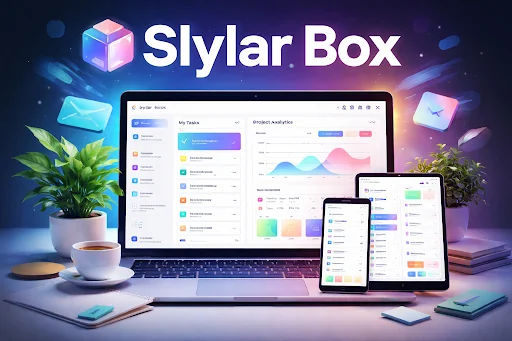
Slylar Box is a modern digital workspace and task management software built to centralize tasks, content, and team collaboration into one streamlined platform. Think of it as a hub where your projects, communications, analytics dashboard, and automation workflows live together—designed with a strong focus on user experience (UX) and a clean software user interface (UI). For individuals and teams, Slylar Box aims to replace scattered productivity tools with one cohesive platform that’s simple to learn and powerful to scale.
Why it matters: In today’s fast-paced digital environment, switching between multiple productivity tools creates friction and lost time. Slylar Box reduces that pain by offering platform integration features, a customizable dashboard, and real-time analytics to improve decision-making. It’s a digital productivity ecosystem that helps you see the whole picture of your work and act on it quickly.
Slylar Box offers a polished combination of features that balance beginner friendliness with advanced capabilities. The interface is intuitive, so beginners can get started fast, while power users can dig into automation workflows and performance tracking metrics. A big part of its appeal is the modular, customizable dashboard that surfaces the things you use most—whether that’s a kanban-style task board, a calendar, or an analytics widget.
Built-in analytics and collaboration systems let teams coordinate without endless meetings. With analytics dashboard widgets, Slylar Box makes engagement and usage statistics visible at a glance. That visibility helps teams optimize workflows and measure the results of changes quickly, turning vague productivity goals into data-driven improvements.
Slylar Box matters because it closes the loop between planning, doing, and measuring. Beyond just listing tasks, it’s a content organization platform that ties tasks directly to assets, conversations, and outcomes. That linkage is a key difference from many legacy task management systems.
Moreover, the platform’s integration capabilities mean fewer context switches—email, cloud storage, and calendar services can plug into Slylar Box, so your workflow remains uninterrupted. This reduces cognitive load and allows teams and individuals to focus on meaningful work rather than tool juggling.
Benefits of Using Slylar Box for Individuals and Teams
For individuals, Slylar Box acts as a single home for daily planning, tracking, and rapid execution. It streamlines personal task management with helpful features like keyboard shortcuts, searchable content, and personalization options that make the interface feel tailor-made.
For teams, the combination of collaboration systems and real-time analytics enables better alignment. Project leads can assign tasks, monitor progress with performance tracking metrics, and use automated workflows to eliminate repetitive manual steps—leading to measurable productivity improvements and more consistent outcomes.
Key Features of Slylar Box
Customizable Dashboard and Interface
Slylar Box’s customizable dashboard is one of its standout features. Users can reorder widgets, pin important projects, and create different views for personal vs. team contexts. This flexibility makes the platform feel personal and powerful, helping you surface what matters most without clutter.
The software user interface balances simplicity and depth: beginners can use default layouts, while advanced users can create highly optimized dashboards with analytics dashboard components, quick action buttons, and embedded documents. The outcome is a cohesive workspace that adapts to how you work.
Seamless Platform Integration
Integration is central to Slylar Box’s value. The platform supports syncing with major calendars, cloud storage, and communication tools so your files, meetings, and messages appear where you need them. This platform integration reduces redundant steps and makes data flow naturally between systems.
By centralizing external inputs, Slylar Box becomes the single pane of glass for your digital work. That integration also enables richer reporting—usage analytics tools can combine data from multiple sources for a more accurate view of productivity.
Real-Time Analytics and Performance Tracking
The real-time analytics dashboard gives you immediate insight into how projects and teams are performing. Widgets display engagement, task completion rates, and other performance tracking metrics that help you make informed decisions fast.
Because analytics are embedded in the workspace, the feedback loop between action and insight is short—test a change, watch the analytics, and adapt. This accelerates improvement cycles and turns guesswork into a data-driven strategy.
Automation and Workflow Management
Automation workflows in Slylar Box reduce repetitive work by automating routine tasks—like moving a card when a checklist is complete, notifying a channel when a milestone is reached, or generating recurring reports. This saves time and minimizes human error.
Workflow management features allow you to chain automations into meaningful sequences, effectively building a custom productivity engine tailored to your team. These tools are essential for scaling processes without scaling effort.
Collaboration Tools and Community Support
Slylar Box includes collaboration systems—comments, shared boards, @mentions, and versioned documents—to keep teams synchronized. These features are designed to reduce meetings and centralize discussion where work happens.
Beyond in-app collaboration, the Slylar Box community and forum support enrich the platform. Users share templates, tips, tricks, and troubleshooting guides that help everyone learn faster and discover hidden features.
Getting Started with Slylar Box
Step-by-Step Setup Guide
Getting started is straightforward. Create an account, choose a workspace template (personal, team, project), and import tasks or data from other productivity tools if needed. The initial setup walks you through integrating calendars and storage, plus invites teammates.
Once set up, spend time tailoring your dashboard and creating a few essential projects. Use the guided tutorials inside the platform to create your first automation and analytics widget—these small wins make the tool feel rewarding immediately.
Configuring Settings for Personal or Team Use
Configure user preferences according to role: admins might enable integrations and team settings, while individual users customize notification levels and display preferences. Teams should align on naming conventions and project templates to maintain clarity.
Permission settings are important for teams: define roles (viewer, editor, admin) to avoid accidental changes and ensure the right people have access to critical workflows.
Tips for Optimizing Display, Notifications, and Preferences
Optimize your display by grouping frequently used apps and widgets on the main dashboard. Reduce noise by customizing notifications—only get alerts that matter. This reduces distraction and keeps your attention on high-impact tasks.
Use themes and personal shortcuts to accelerate navigation. Small interface tweaks can shave minutes off daily routines and deliver a smoother user experience.
Importance of Software Updates
Keep Slylar Box updated to access performance optimization and security patches. Software updates often include new automations, improved analytics, and bug fixes that improve reliability.
Set update policies for teams—test major updates in a sandbox before rolling them out widely to avoid disruption.
Navigating the Slylar Box Interface Like a Pro
Understanding the Dashboard Layout
Master the dashboard layout by identifying the primary zones: navigation bar, main workspace, widgets, and quick action area. The structure is designed for intuitive navigation so you can move from planning to action quickly.
Spend a session customizing the layout to your workflow—pinning your top projects and analytics dashboards reduces the friction of switching contexts.
Using Search Functions Effectively
Slylar Box’s search function indexes tasks, attachments, conversations, and analytics—making it a powerful tool for retrieving context fast. Use filters and saved searches to create shortcuts for frequent queries.
Learning advanced search operators (date ranges, assignee filters, tag matches) will dramatically speed up locating specific items and reduce the need to navigate folders.
Keyboard Shortcuts and Time-Saving Tips
Keyboard shortcuts are productivity gold. Common shortcuts for creating tasks, toggling views, and opening search speed up repeated actions and keep your hands on the keyboard.
Create shortcuts for recurring workflows—templates for meeting agendas or status reports—so you can reproduce complex actions in just a few keystrokes.
Personalizing Themes and Interface Elements
Personalization improves comfort and reduces cognitive load. Choose a theme that reduces eye strain and position elements in a way that aligns with how you think.
For teams, standardized themes can help with onboarding—consistency makes training faster and reduces confusion.
Advanced Features for Maximum Productivity
Automating Repetitive Tasks
Identify routine actions that can be automated—status updates, task handoffs, and recurring reminders are good candidates. Automations free mental bandwidth for higher-value work and reduce errors.
Advanced automations can integrate external tools, trigger emails, or create reports on a schedule. Use them conservatively: prioritize automations that provide clear time savings.
Leveraging Real-Time Analytics for Performance Improvement
Use the real-time analytics dashboard to monitor key performance indicators and spot bottlenecks. For example, if task completion times spike, drill into task data to find root causes and optimize workflows.
Regularly review analytics with your team to align expectations and set measurable goals. Data-driven retrospectives lead to continuous improvement.
Tracking Engagement and Usage Metrics
Engagement metrics show who is using which features and how frequently. These insights help leaders allocate training resources and identify adoption gaps.
Usage metrics also inform product decisions—if a powerful feature is underused, consider highlighting it in onboarding or simplifying its UI.
Using Collaboration Tools Efficiently
Adopt a communication-first approach inside Slylar Box: keep discussions next to the work they relate to. Use @mentions for clear accountability and threads to preserve context.
Combine collaboration with automation—notify stakeholders when a task reaches a milestone to keep momentum without manual status updates.
Troubleshooting Common Slylar Box Issues
Connectivity and Performance Issues
If you encounter connectivity problems, check your internet and any integration endpoints. Sometimes clearing the cache or switching network settings can help. Use the built-in diagnostics to check API or sync status.
For persistent performance issues, review workspace size and archive old projects. Heavy workspaces with large attachments can slow down client performance—archiving or linking to external storage improves responsiveness.
App Freezing, Crashing, or Glitches
When the app freezes, a safe restart often resolves the issue. Ensure you’re running the latest version and look through the release notes for known issues. If crashes persist, export logs and reach out to support with detailed reproduction steps.
Proactive practices—like regular backups and limiting extension usage—reduce the chance of corruption or conflicts.
Accessing Restricted Features
Permission problems are usually due to role settings. Check user roles and invite flows. Admins should audit permissions to ensure the right people have access to advanced features without exposing sensitive data.
For integrations, confirm that OAuth tokens or API keys are valid and have necessary scopes.
Utilizing Help Documentation and Community Support
Slylar Box’s help center and community forum are excellent first stops. Search the troubleshooting guide for step-by-step fixes, or join community channels to ask nuanced questions. Community templates and shared automations often solve problems faster than official support.
If you need official help, prepare a clear bug report—steps to reproduce, screenshots, and logs—to speed resolution.
Tips and Tricks for Power Users
Organizing Apps and Tools Based on Frequency of Use
Group frequently used apps and widgets on the main dashboard. Use categories or tags to quickly navigate related tasks and assets. This reduces search time and keeps momentum during work sprints.
For teams, adopt a naming convention for projects and tags so everyone finds information predictably.
Creating Automated Workflows for Efficiency
Map out manual processes and automate the lowest-value tasks first. For instance, automatically routing completed work to an archive folder or notifying a reviewer when a draft hits 90% completion saves repetitive effort.
Test and iterate automations—start small, measure impact, and expand what works.
Engaging with the Community to Discover Hidden Features
Community forum support and user groups are rich sources of hidden features and creative workflows. Templates, keyboard shortcut lists, and shared dashboards often live in community spaces.
Participate by sharing your automations back—this builds goodwill and speeds innovation across users.
Optimizing Settings for Personal and Team Productivity
Regularly review notification settings and integrations to reduce noise. Use usage analytics tools to understand what features are actually helping your team, then double down on those.
Encourage a culture of clean workspaces—archive completed projects and keep active dashboards lean.
Comparing Slylar Box with Other Productivity Tools (Optional Section for SEO Boost)
Differences Between Slylar Box and Traditional Task Management Apps
Unlike basic task apps that only list items, Slylar Box integrates analytics, automation, and collaboration into one platform. Traditional apps often require multiple plugins or separate tools to get the same depth.
Slylar Box’s real-time analytics and customizable dashboards provide a higher level of visibility and control, turning it into more of a digital workspace than just a to-do list.
Unique Advantages of Slylar Box Over Competitors
Slylar Box’s main advantages are its blend of simplicity and power: an accessible UI for beginners plus advanced automation and analytics for power users. Its platform integration features reduce friction and create a unified productivity ecosystem.
The active community and templates also accelerate adoption—teams can get meaningful results faster than building everything from scratch.
Which Type of User Benefits Most from Slylar Box
Slylar Box works well for professionals who need both structure and flexibility—project managers, content teams, product squads, and freelancers who juggle multiple clients. Organizations that prize measurable outcomes benefit most thanks to the analytics and automation features.
Beginners also benefit because the learning curve is gentle; the platform scales as skills grow.
User Testimonials and Case Studies
Real-Life Examples of Slylar Box Improving Workflow
Case study: a content marketing team reduced meeting time by 30% after centralizing editorial calendars and embedding an analytics dashboard that highlights publishing cadence and engagement. Automations handled content handoffs and review reminders, freeing time for creative work.
Another example: a small design studio used Slylar Box to manage client deliverables, linking source files directly to tasks. The project lifecycle became transparent, clients received automated status updates, and delivery times dropped.
Success Stories from Individual Users and Teams
Individual freelancers report better time management because Slylar Box merges billing, tasks, and deliverables in one place. Team leads praise the visibility of performance tracking metrics that make post-mortem discussions objective and constructive.
These testimonials show how the platform’s features compound to produce real productivity gains.
Frequently Asked Questions
What is the best way to get started with Slylar Box?
Begin with the guided setup—choose a template (personal or team), integrate your calendar and cloud storage, and customize your dashboard. Run one automation to see immediate value.
Can Slylar Box integrate with other apps?
Yes. Slylar Box supports many platform integration features, including calendars, cloud storage, and messaging services. Check the integrations directory for specifics.
Is Slylar Box suitable for small teams?
Absolutely. The collaboration systems, permission controls, and analytics dashboard scale for small teams and growing organizations.
How secure is the data in Slylar Box?
Slylar Box follows standard security practices—encryption in transit and at rest, role-based access, and regular security updates. Always follow your organization’s policy for sensitive data.
What should I do if Slylar Box runs slowly?
Clear cache, archive old projects, reduce attachment sizes, and check network health. If issues persist, contact support with logs.
Summary
Slylar Box combines the best elements of productivity tools, digital workspace platforms, and task management software into a single, polished product. Its user experience design and customizable dashboard make it accessible and delightful to use, while its analytics dashboard and automation workflows deliver measurable impact.
If you want to transform your workflow, reduce busywork, and make decisions backed by real data, Slylar Box is an essential tool to test. Start with a focused setup, use the community to learn powerful shortcuts, and iterate with analytics to keep improving. This platform is engineered to grow with you—whether you’re a solo creator or a cross-functional team.
Stay tuned with Byte Vibe!