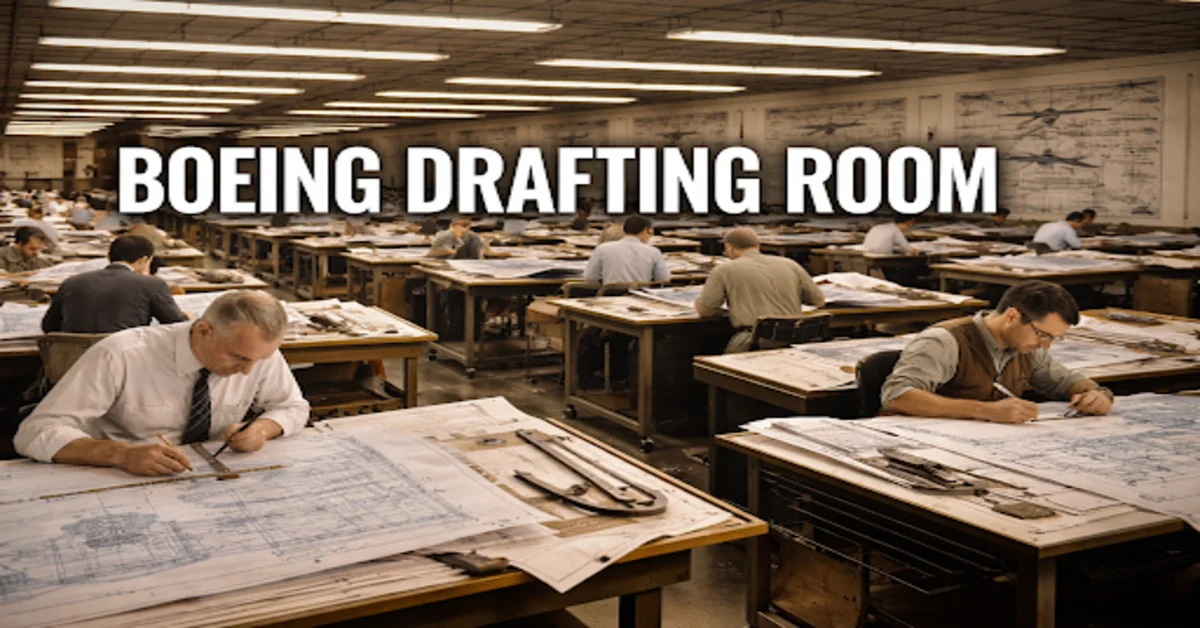
The Boeing drafting room stands as a symbol of meticulous craftsmanship, innovation, and the meticulous artistry that shaped the world’s most iconic aircraft. But what was the Boeing drafting room exactly? It was more than a workspace—it was the beating heart of Boeing’s engineering efforts, a place where engineers, drafters, and designers translated visionary ideas into precise technical blueprints that would guide the construction of the legendary aircraft collection.
In the history of aerospace design, the drafting room played a central role. From the early days of propeller-driven bombers to the rise of commercial jets, every line, curve, and measurement documented in these rooms influenced the safety, efficiency, and performance of aircraft that would soar across the skies. Before the advent of digital systems, Boeing relied entirely on manual drafting techniques, ensuring that every component met the highest standards.
The transition from manual drafting to digital CAD systems marked a transformative moment for Boeing. While modern tools like CATIA allowed for faster, more flexible design, the precision, discipline, and collaborative culture cultivated in the drafting rooms continue to inspire engineers today.
RELATED: Oncepik: Boost Productivity and Teamwork
The History of the Boeing Drafting Room
The Boeing drafting room history is a journey through decades of innovation. Boeing’s early facilities were designed to accommodate large teams of engineers and drafters working side by side. These rooms were meticulously organized to support the creation of complex engineering drawings that formed the backbone of aircraft design.
A notable chapter in this history is the “Red Barn” drafting room at Boeing Plant 2. This space became legendary for its open layout and disciplined workflow, where dozens of draftsmen worked in unison to produce the technical drawings that would define Boeing aircraft. The drafting room era coincided with a time when aircraft like the Boeing B‑17 Flying Fortress and B-29 Superfortress were developed, showcasing the critical role of precise manual drafting techniques.
During this era, drafting rooms were not only a physical space but also a hub of Boeing engineering culture. Collaboration, attention to detail, and rigorous revision control were essential to ensure that every drawing met the exacting standards required for aircraft production. The combination of talent, tools, and workflow made the drafting rooms the foundation of Boeing’s engineering success in the mid-20th century.
Structure and Culture of the Drafting Room
The layout of a typical Boeing drafting room was designed for efficiency and collaboration. Large drafting tables covered with sheets of vellum, specialized lighting, and organized tool stations created an environment optimized for precision work. Drafters, engineers, and coordinators worked closely, sharing technical knowledge and ensuring seamless integration of every design element.
Roles within the drafting room were clearly defined. Drafters executed detailed plans under the guidance of engineers, while coordinators ensured that revisions were properly documented. Daily workflow was governed by strict revision control systems, preventing errors and maintaining consistency across the thousands of drawings produced.
The work culture in Boeing’s drafting rooms reflected discipline and a shared sense of purpose. Long hours, meticulous checks, and collaborative problem-solving created an environment where innovation thrived. The collaborative atmosphere fostered mentorship, skill development, and an appreciation for the artistry of drafting board engineering history.
Tools and Techniques Used in Boeing Drafting Rooms
Manual drafting required specialized tools and a high level of skill. T‑squares, French curves, technical pens, and vellum were essential instruments for producing accurate aeronautical design process outputs. Slide rules, scales, and precision measurement devices complemented these tools, enabling draftsmen to create engineering drawings with exceptional accuracy.
Creating blueprints was a multi-step process. After initial sketches were completed, drawings were meticulously inked and reproduced for use by manufacturing teams. The Boeing blueprint era relied heavily on this system, with every drawing serving as a definitive guide for assembly.
Some of the most famous Boeing technical drawings collection items originated in these drafting rooms, from bomber components to intricate airframe sections of the Boeing 747. The legacy of these drawings continues to be preserved in archives like The Museum of Flight and specialized aircraft blueprint collections, offering a window into the era of vintage Boeing drafting.
The Drafting Room Workflow
The Boeing drafting room workflow was a carefully choreographed sequence of design, review, and revision. It began with conceptual sketches, which were refined into detailed technical blueprints. Each drawing passed through multiple levels of review, ensuring accuracy before moving to manufacturing.
Designs moved from paper to production through collaboration between engineering, testing, and production teams. Drafters communicated directly with engineers to clarify dimensions, tolerances, and material specifications. The manual drafting era demanded rigorous attention to detail to prevent errors that could compromise aircraft safety.
Revision management was a cornerstone of the drafting room workflow. Engineers and coordinators maintained strict control over document versions, ensuring that any changes were accurately reflected in all related drawings. This systematic approach laid the groundwork for today’s digital aircraft design standards.
Iconic Aircraft Designed in the Boeing Drafting Room
The Boeing drafting room was instrumental in designing some of the most iconic aircraft in history. The B-17 Flying Fortress and B-29 Superfortress were early examples of military engineering excellence, requiring detailed planning to ensure reliability and performance under demanding conditions.
Boeing’s entry into commercial aviation saw the development of early jets like the 707, 727, and 737, where drafting rooms translated aerodynamic concepts into practical blueprints for assembly. The Boeing 747, an icon of global aviation, also owes much of its design precision to the careful work conducted in these rooms.
Manual drafting influenced aircraft safety and performance by enforcing a culture of precision. Every measurement, curve, and angle documented in the drafting room contributed to engineering decisions that ensured the durability and efficiency of Boeing aircraft.
Transition from Manual Drafting to Digital Design
The introduction of Computer-Aided Design (CAD) revolutionized aircraft design. The transition from pencil and vellum to digital systems allowed for faster iterations, improved collaboration, and greater accuracy. However, the shift was not without challenges, as engineers adapted to new workflows and technologies.
The Boeing 777 marked a milestone in this transition, becoming one of the first aircraft designed entirely using CATIA software. This paperless design approach dramatically changed the drafting workflow, reducing errors and streamlining collaboration across teams and locations.
Despite the move to digital, the principles learned in the manual drafting era—meticulous attention to detail, collaborative review, and rigorous revision control—remained fundamental to Boeing’s design philosophy. The pencil to CAD shift reflects a seamless blend of tradition and modern innovation.
Legacy of the Boeing Drafting Room
The Boeing drafting room’s legacy extends beyond technical drawings. It represents a historical milestone in aerospace engineering and a testament to human precision and collaboration. Archives of drafting room work, including blueprints and technical documentation, are preserved in institutions like The Museum of Flight, offering insight into the evolution of aircraft design.
Lessons from the manual drafting era continue to influence modern aerospace design and engineering culture. Concepts like master layout coordination and meticulous documentation have carried forward into digital aircraft design, shaping workflows and standards used by engineers worldwide.
The drafting room also serves as a cultural icon, symbolizing the dedication and craftsmanship that enabled Boeing to achieve global success. The meticulous work of engineers and drafters laid the foundation for the Boeing 747, Boeing 777, and countless other aircraft that define modern aviation.
RELATED: Dixie Brubaker: Life Beyond the Spotlight
Frequently Asked Questions
What tools were used in the Boeing drafting room?
The drafting room utilized T‑squares, French curves, technical pens, vellum, slide rules, and precision measurement instruments to create detailed and accurate engineering drawings.
When did Boeing stop using manual drafting rooms?
Manual drafting largely phased out in the late 1980s and early 1990s, coinciding with the adoption of CAD systems for programs like the Boeing 777.
How did the drafting room impact aircraft design quality?
The structured workflows, meticulous review processes, and precision tools ensured that every blueprint met rigorous standards, directly contributing to aircraft safety and performance.
Are Boeing drafting room blueprints available in archives?
Yes. Institutions like The Museum of Flight and aerospace archives preserve collections of technical drawings from the drafting room era, providing valuable historical references.
Summary
The Boeing drafting room remains an enduring symbol of innovation, craftsmanship, and collaboration. From the B-17 Flying Fortress to the Boeing 777, this workspace shaped the trajectory of aerospace engineering, blending artistry and technical mastery.
The evolution from manual drafting to digital CAD systems highlights Boeing’s commitment to precision and adaptability, ensuring that the company continues to lead in aircraft design. The drafting room’s legacy lives on through its archived technical drawings, its influence on modern design workflows, and the culture of excellence instilled in generations of engineers.
For aerospace enthusiasts, engineers, and historians, the Boeing drafting room offers a fascinating glimpse into the meticulous processes that underpin the flight of some of the world’s most remarkable aircraft. Its story celebrates human ingenuity, attention to detail, and the pursuit of excellence that continues to inspire innovation in the skies today.