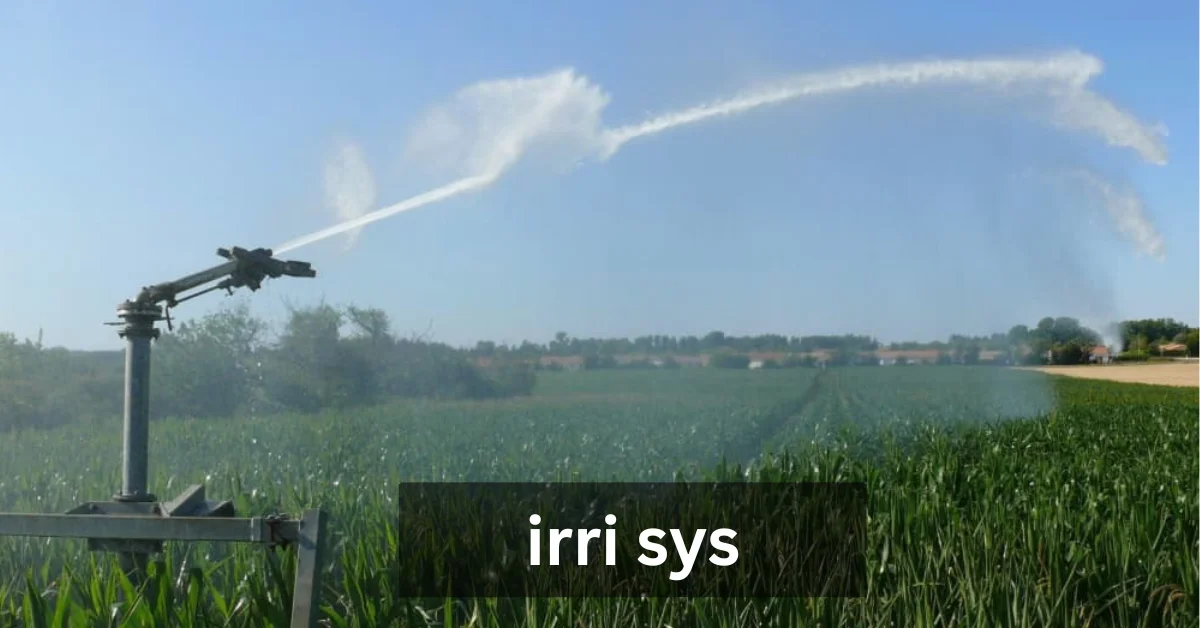
Irri Sys is an intelligent irrigation system that automates water delivery using sensors and smart controls for efficient crop and landscape watering. With climate change, water scarcity, and increasing food demand, traditional irrigation methods are no longer sufficient to meet the needs of modern farming. This is where Irri Sys, a cutting-edge smart irrigation system, comes into play. Designed to integrate technology with agricultural practices, Irri Sys represents a significant leap forward in precision irrigation, enabling farmers and landscapers to optimize water use while boosting crop yields.
Irri Sys is not just another irrigation solution—it is a comprehensive water management system that leverages advanced sensors, soil moisture monitoring, IoT irrigation systems, and cloud-connected platforms to automate and streamline irrigation processes. Whether you are managing vast farmland, orchards, vineyards, or urban green spaces, Irri Sys provides a sustainable, cost-effective, and technologically sophisticated way to ensure that plants receive the right amount of water at the right time.
In this blog, we will explore Irri Sys in detail—from its components and technology to its benefits, implementation, and real-world applications. By the end of this article, you will understand why Irri Sys is a game-changer in sustainable irrigation solutions and how it can transform modern agriculture through precision farming irrigation and data-driven water management.
RELATED: Berushbrand Com: Deals, Products & Safety Tips
Understanding Irri Sys: Smart Irrigation Systems
At its core, Irri Sys is an intelligent irrigation system designed to automate water delivery while optimizing efficiency. Unlike conventional systems that rely on fixed schedules and manual operation, Irri Sys uses data from soil moisture sensors, weather-based irrigation controllers, and predictive analytics to determine the precise amount of water each plant or section of land requires.
The components of Irri Sys typically include:
- Smart Irrigation Controllers: Devices that automatically adjust watering schedules based on environmental data.
- Soil Moisture Sensors: Instruments that detect moisture levels to prevent overwatering or underwatering.
- Evapotranspiration (ET) Algorithms: Mathematical models that calculate the amount of water lost from soil and plants to the atmosphere, guiding precise irrigation.
- Wireless Sensor Networks (WSN): Networks that transmit real-time field data to controllers for analysis.
Cloud-Connected Irrigation Platforms: Online interfaces that allow remote monitoring and control of irrigation systems.
The main difference between traditional and smart irrigation lies in data integration and automation. Traditional irrigation depends heavily on fixed schedules and human judgment, which often leads to water wastage or insufficient irrigation. In contrast, Irri Sys ensures precision irrigation, aligning water application with the actual needs of crops and local environmental conditions.
Key terms such as automated irrigation, precision agriculture systems, and irrigation monitoring are central to understanding Irri Sys. By combining these technologies, Irri Sys not only conserves water but also supports drought-resilient farming and maximizes crop health and productivity.
Types of Irri Sys Solutions
Irri Sys is adaptable and supports multiple types of irrigation systems, each tailored to specific agricultural and landscaping needs:
Drip Irrigation Systems
Drip irrigation delivers water directly to plant roots through a network of tubes and emitters. By minimizing evaporation and runoff, it maximizes water efficiency. When combined with Irri Sys technology, drip irrigation can be scheduled automatically based on real-time soil moisture data, ensuring crops receive optimal hydration.
Sprinkler Irrigation Systems
Sprinkler systems distribute water across fields or lawns in patterns similar to rainfall. Integrating a Smart Irrigation Controller allows sprinklers to adjust spray patterns, timing, and volume according to weather forecasts and soil conditions. This combination provides significant water usage optimization for large fields or urban landscapes.
Subsurface Irrigation
Subsurface Textile Irrigation (SSTI) delivers water below the soil surface, directly to plant roots. This method reduces evaporation and supports consistent soil moisture. Coupled with sensor-driven irrigation logic, Irri Sys can automate subsurface irrigation schedules, improving water conservation and crop yield.
Micro and Center Pivot Irrigation
Micro-irrigation targets small areas with high precision, while center pivot irrigation rotates across fields in large circular patterns. Irri Sys enhances both systems by incorporating wireless sensor networks, real-time irrigation control, and cloud-connected monitoring, allowing farmers to manage irrigation more efficiently and sustainably.
By integrating IoT-enabled irrigation, predictive analytics, and evapotranspiration calculations, all Irri Sys solutions ensure water is delivered precisely where and when it is needed, reducing waste and promoting sustainable farming practices.
Technology Behind Irri Sys
The technological foundation of Irri Sys is what sets it apart from conventional irrigation systems. Modern Irri Sys solutions leverage cutting-edge tools to automate and optimize irrigation:
IoT-Enabled Irrigation
The Internet of Things (IoT) allows irrigation systems to connect devices, sensors, and controllers into a seamless network. Farmers can monitor soil moisture, weather, and system performance remotely, making real-time decisions that conserve water and improve productivity.
Soil Moisture Sensors & Environmental Monitoring
Soil moisture sensors measure the water content in soil, providing critical data to prevent overwatering or underwatering. Environmental sensors track humidity, temperature, and rainfall, feeding this data into digital irrigation monitoring systems.
Weather-Based Irrigation Control
By integrating weather forecasts, Irri Sys adjusts watering schedules based on rainfall, temperature, and evapotranspiration rates. This climate-aware approach ensures water is applied only when necessary, reducing waste and supporting drought management tools.
Cloud-Connected Irrigation Platforms
Cloud-connected irrigation platforms provide a centralized interface for monitoring and controlling irrigation systems. Users can manage multiple fields, receive alerts, and analyze data to optimize water usage.
Data Analytics & Predictive Maintenance
Irri Sys employs predictive maintenance models to forecast potential system failures, ensuring uninterrupted operation. Advanced analytics analyze crop evapotranspiration data, irrigation patterns, and environmental factors, enabling precision agriculture and long-term water management planning.
Benefits of Using Irri Sys
Adopting Irri Sys offers numerous advantages for farmers, landscapers, and communities:
Water Conservation & Efficient Usage
Irri Sys ensures that every drop of water is used effectively. By integrating sensor-based irrigation, soil moisture monitoring, and evapotranspiration algorithms, it reduces water waste, promotes groundwater conservation, and supports sustainable water management.
Crop Yield Optimization & Precision Agriculture
Precision irrigation and real-time monitoring help maintain optimal soil conditions, enhancing plant health and increasing crop yield optimization. Farmers can implement precision farming irrigation strategies, tailoring water delivery to each crop’s unique requirements.
Reduced Labor and Operational Costs
Automated scheduling, remote monitoring, and predictive maintenance reduce the need for manual intervention. This decreases labor costs while ensuring consistent and reliable irrigation.
Sustainable Water Management for Drought-Prone Areas
Irri Sys empowers farmers in water-scarce regions to implement climate-aware irrigation practices. By optimizing water use and supporting drought-resilient farming, Irri Sys contributes to long-term sustainability and environmental stewardship.
Implementation of Irri Sys in Agriculture
Installing and deploying Irri Sys requires careful planning and the right tools:
Steps to Install and Set Up Irri Sys
- Site Assessment: Evaluate soil types, crop needs, and water sources.
- System Design: Choose the appropriate irrigation system (drip, sprinkler, subsurface, etc.).
- Sensor Placement: Install soil moisture sensors and environmental monitors strategically.
- Controller Setup: Configure Smart Irrigation Controllers and link to cloud-connected platforms.
- Automation & Scheduling: Set watering schedules based on real-time data, ET calculations, and climate patterns.
Tools and Devices Required
Drip lines, sprinklers, or subsurface irrigation units
Soil moisture sensors and weather monitors
- IoT-enabled irrigation controllers
- Cloud access for data analytics and remote monitoring
Maintenance Best Practices
Regular system checks, sensor calibration, and software updates ensure optimal performance. Predictive maintenance models help anticipate potential failures, reducing downtime.
Costs and ROI Considerations
While initial setup may require investment, water savings, improved crop yields, and reduced labor costs ensure long-term return on investment. Many farmers report up to 30–50% water savings after implementing smart irrigation systems.
Real-World Use Cases
Farms Adopting Irri Sys
Large and small farms worldwide are leveraging Irri Sys for efficient water management. Orchards, vineyards, and row crops benefit from precision irrigation systems, increased yield, and reduced water use.
Urban Landscaping and Irrigation
City parks, golf courses, and urban gardens use Irri Sys to maintain greenery sustainably. Wireless irrigation solutions and cloud-connected platforms allow facility managers to optimize watering schedules, saving water and costs.
Government and Community Water Management Projects
Municipalities in drought-prone regions adopt Irri Sys technology for sustainable irrigation solutions, ensuring public landscapes and farmland receive adequate water without depleting local water resources.
Case Studies Showcasing Measurable Benefits
Studies reveal significant improvements in water conservation technology, crop yields, and operational efficiency. These case studies demonstrate how integrating IoT irrigation systems with predictive analytics produces measurable, real-world results.
Challenges & Limitations
Despite its advantages, implementing Irri Sys comes with some challenges:
- Technical Challenges: Sensors and wireless networks require proper installation and calibration.
- Cost and Accessibility: Initial investment may be high for small-scale farmers.
- Data Dependence: System efficiency relies on accurate data from sensors and analytics.
- Solutions include phased implementation, training programs, and using hybrid models that combine traditional and smart irrigation techniques to mitigate risks.
Future Trends in Smart Irrigation
The future of Irri Sys and smart irrigation is promising:
- AI-Powered Irrigation Planning: Artificial intelligence will optimize irrigation schedules based on predictive analytics and historical data.
- Integration with Precision Agriculture Tools: Drones, satellite imagery, and IoT devices will enhance crop irrigation optimization.
- IoT and Automation Advancements: Wireless sensor networks will become more reliable, and cloud-connected platforms will offer real-time insights for farmers worldwide.
- Global Water Sustainability Trends: Governments and organizations will increasingly adopt sustainable water management practices powered by Irri Sys technology.
RELATED: ADSWYNK COM: How It Really Works
Frequently Asked Questions
Is Irri Sys suitable for small farms?
Yes. Irri Sys solutions are scalable, allowing small and medium farms to adopt sensor-based irrigation and automated scheduling effectively.
Can it reduce water costs significantly?
Absolutely. By preventing overwatering and optimizing water usage, Irri Sys can reduce water consumption by up to 50%, lowering operational costs.
What components make up a smart irrigation system?
Core components include soil moisture sensors, Smart Irrigation Controllers, wireless sensor networks, and cloud-connected irrigation platforms.
How does predictive analytics enhance irrigation efficiency?
Predictive models forecast system failures, crop water needs, and environmental impacts, enabling precise irrigation decisions that save water and improve crop health.
Summary
Irri Sys represents the future of modern irrigation. By combining smart irrigation controllers, IoT-enabled sensors, evapotranspiration algorithms, and cloud-connected platforms, it delivers precise, efficient, and sustainable water management solutions. Farmers, urban landscapers, and governments alike benefit from reduced water waste, optimized crop yields, and drought-resilient farming practices.
Adopting Irri Sys ensures long-term sustainability while embracing precision agriculture and advanced irrigation technology. With continuous advancements in AI, IoT, and predictive analytics, smart irrigation systems like Irri Sys are set to redefine how we manage water, conserve resources, and feed the world efficiently.